FREE SHIPPING On All Orders
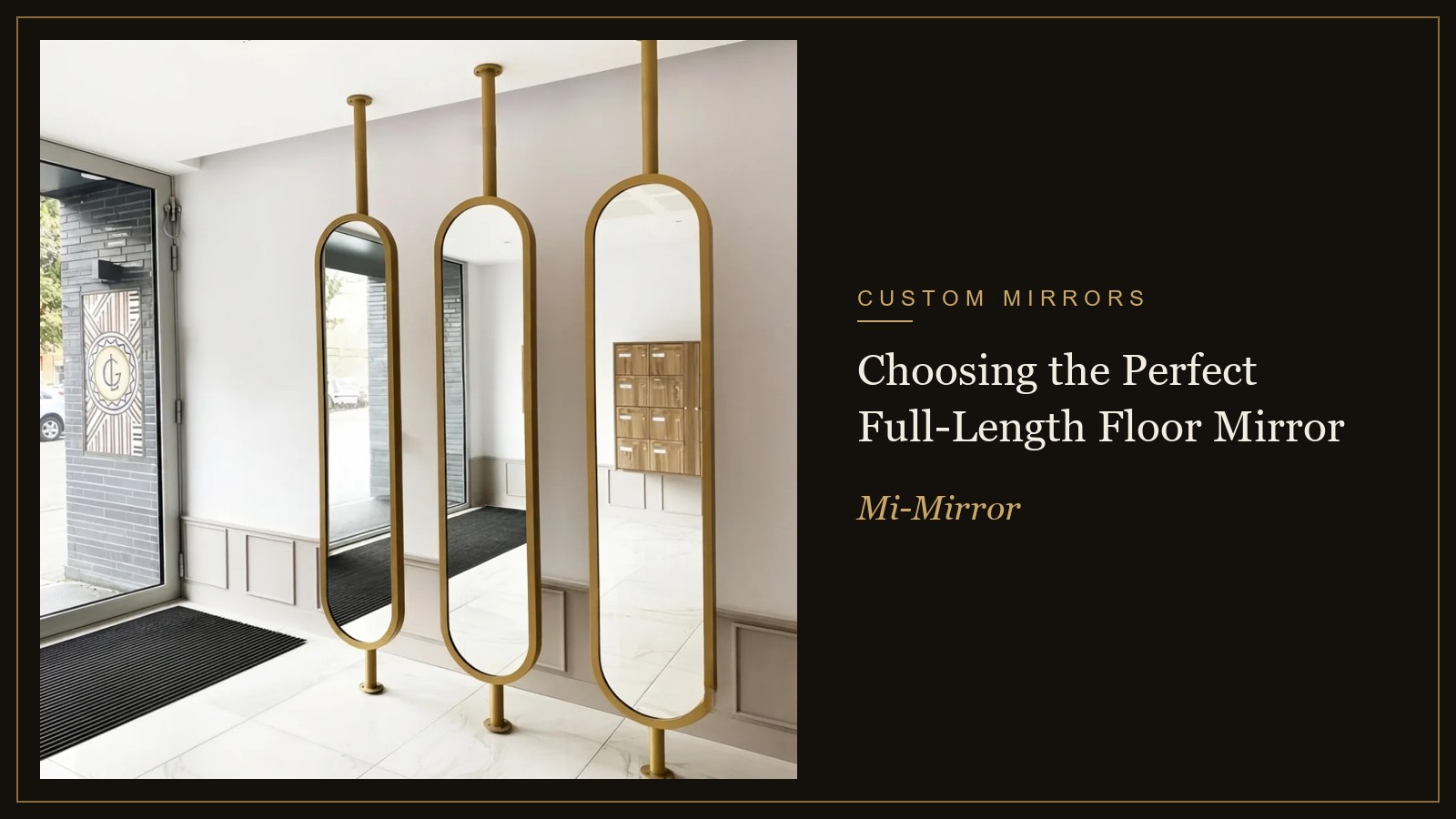
A mirror can change how a room feels before you add a single piece of furniture. It can pull more light into a dim corner, make a narrow space feel more open, and give an otherwise unfinished wall a strong visual anchor.
The challenge is choosing a mirror that complements the room and doesn’t compete with it. Size, proportions, location, type of frame, quality of glass, and mounting contribute to the result.
For homeowners, the right mirror can turn a bedroom, dressing area, entryway, or living room into a more polished space. For interior designers and commercial teams, the decision also involves durability, safety, repeatable specifications, and how the mirror will perform in a busy environment.
Here is how to choose a full-length floor mirror that fits your space, complements your interior, and delivers the functionality you expect.
A floor mirror has two jobs: reflection and spatial design. Its reflective surface gives you a practical head-to-toe view, while its size and placement influence the room’s visual balance.
A tall vertical mirror naturally draws the eye upward. This can emphasize ceiling height and add architectural structure to a room. In smaller interiors, the reflected view can also create a greater sense of depth, particularly when the mirror faces a window, doorway, or attractive part of the room.
Placement matters as much as the mirror itself. A mirror facing a window can reflect daylight into the room. One positioned near a lamp or wall sconce can increase the sense of brightness after dark. A mirror placed across from clutter, however, can make the room feel busier.
The frame provides an additional layer of design. Slim metal frames are perfect for modern and industrial-style living, and wood can add warmth to organic and transitional spaces. If you’re aiming for a cleaner architectural look, go without frames.
Finding the right full-length mirror is less about a set calculation and more about how those dimensions feel in your space and in your day. The ideal mirror allows for full-body reflection, comfortably sits on the layout, and complements the room setting without dominating it.
Here’s how to choose the right full-length mirror size:
Measure the full vertical and horizontal space first. This helps you understand the maximum scale the room can support before selecting a design.
For a full-body mirror, a 60- to 72-inch height is enough for most users to feel that they have adequate coverage. This size is ideal for standard bedrooms and dressers.
A narrower mirror can work for basic outfit checks, while a wider design provides a more generous viewing area and stronger visual presence.
Taller individuals may benefit from additional height, while narrow hallways often require slimmer profiles. In contrast, spacious dressing rooms can accommodate wider, more decorative pieces.
A large full-length floor mirror can serve as a focal point in a bedroom or living room, while a taller design is best for small apartments with limited floor space.
Before ordering, measure carefully:
Keep in mind that the size is measured across both the glass and the frame. This can make a big difference when it comes to placing the mirror in a room, particularly in smaller spaces.
The best location combines practical use with a strong reflected view. Think about what the mirror will show at different times of day.
A bedroom is one of the most useful locations for a floor mirror. Positioning it beside a wardrobe or dressing area makes outfit checks convenient. A corner near the closet can work particularly well when wall space is limited.
A bedroom floor mirror can also sit near a window if the reflected view adds brightness without creating uncomfortable glare.
In a living room, use the mirror as part of the overall composition. A large wall living room mirror, the end of a console, or an unused corner can provide a natural location.
Placing a mirror where it reflects a window, artwork, greenery, or an architectural feature creates a more intentional visual effect. Don’t put it where it has a view of TV screens or clutter, or in busy spaces unless that’s part of your look.
When you choose an entryway mirror, you’re really looking for a blend of function and decoration. It adds a final appearance check before you go and can open up a tight entryway visually. For the small entryway, vertical alignment on the wall can make the ceiling height look higher, creating visual depth.
Dressing areas benefit from maximum visibility. A standing full-length mirror lets you assess an outfit, shoes, and proportions without going too far back.
For commercial dressing areas, two or more mirrors can be mounted to each other at different angles for multiple views, without obstructing circulation.
A full-length floor mirror can do more than reflect your outfit. It can help shape the mood and balance of a space. With a few simple styling choices, it becomes a design feature rather than just a functional object.
The mirror should support the room’s design language.
An oversized floor mirror works particularly well when the room has enough negative space around it. The goal is visual scale, not simply maximum size.
A leaning mirror brings a relaxed, effortless feel to bedrooms, dressing areas, and casual living rooms. However, it still needs intentional styling to look balanced.
Standard mirror dimensions do not always work in real interiors. Older homes, renovated spaces, commercial projects, and architect-designed rooms can have dimensions that fall outside common sizes.
Custom sizing can solve that problem.
A standard mirror can only do so much when a small wall is your canvas, both in terms of visuals and function. In these instances, a tall and narrow mirror works best, as the shape allows for maximum vertical reflection without overpowering the small horizontal dimension.
Our Creative Arch Full Length Floor Mirror provides a sculptural vertical silhouette with made-to-order sizing options, which is great when you need full-length practicality but can’t let the mirror overpower a thin wall.

Rooms with high or double-height ceilings can make standard mirrors appear too small or visually disconnected from the space. If your walls are high or double-height, you might find a taller custom mirror. It will fill the vertical space and enhance the sense of proportion between floor and ceiling.
It also enhances the room’s architectural height by drawing the eye upward. The Nordic Style Full Length Mirror can be customized in size, materials, and shape, giving designers more flexibility when specifying a mirror for a room with generous vertical proportions.

Spaces like attic bedrooms, lofts, or architectural interiors with angled ceilings require careful planning because standard rectangular mirrors often do not align well with irregular geometry. The custom size option makes it possible to adjust the mirror to your wall space, so it fits perfectly in your room’s layout.
For spaces where a softer silhouette works better with the architecture, the Full Length Oval Shape Floor Mirror provides an alternative to conventional rectangular proportions and offers custom design flexibility.

In smaller living spaces, every inch matters, so a full-length mirror placement must be highly efficient. A custom mirror can be designed to fit tight corners, narrow wall strips, or unconventional layouts without interfering with essential furniture or circulation paths.
You can consider a statement piece like the Luxury Full Length Oval Floor Mirror for smaller spaces. It combines a full-length format with a softer oval profile, making it an option for compact interiors where the mirror needs to provide useful reflection while maintaining a lighter visual presence.

Luxury residences often feature expansive walls, high-end finishes, and carefully curated architectural details. In such environments, standard mirror sizes may feel underwhelming or out of scale. Custom dimensions allow the mirror to fit perfectly within the room’s spatial dimensions, whether as a subtle detail or a bold statement piece.
Mi Mirror’s Luxury Hotel Full Length Rectangle Floor Mirror is available in multiple size options. It can be customized, making this type of refined rectangular design suitable for larger, design-led interiors where proportion and finish need to work together.

For dressing rooms, retail spaces, hospitality suites, and other large-scale environments, wall-to-wall mirror installations create a continuous and immersive visual effect. These tailored solutions can cover entire wall sections with continuous reflection, adding to the practicality and openness of space.
For projects that require a more specialized solution, the Full Length Fitting Room & Dressing Smart Mirror supports custom sizes, materials, shapes, framing, lighting, and technology integration, giving commercial designers and project teams greater flexibility when planning larger mirror installations.
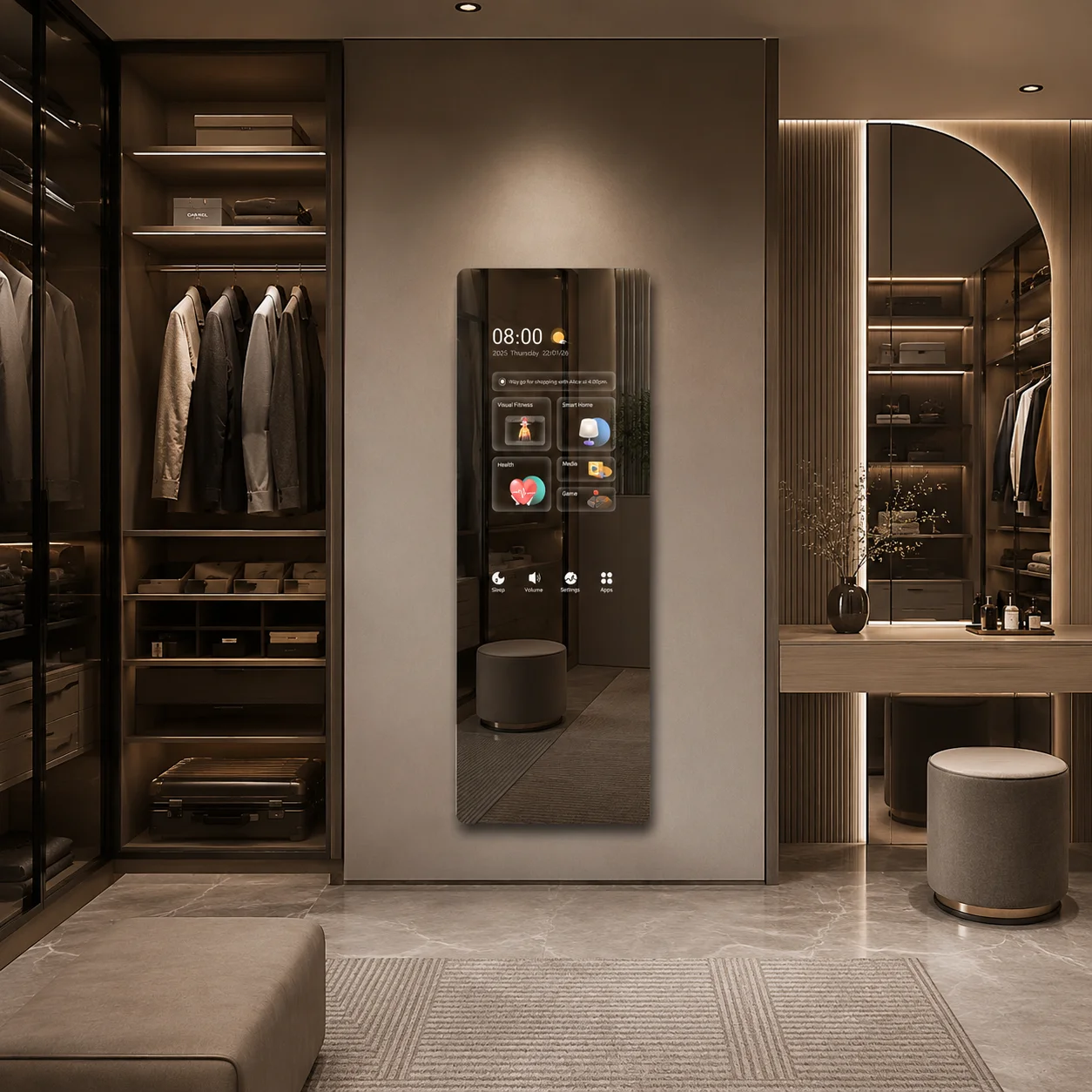
A custom full-length mirror can be specified around the room’s actual dimensions rather than forcing the room to accommodate an off-the-shelf product. That matters when clearances, furniture layouts, ceiling heights, and architectural details all need to work together.
For designers and contractors, custom dimensions can also make it easier to coordinate the mirror with millwork, lighting, wall panels, wardrobes, and other fixed elements.
Commercial interiors have different requirements from residential rooms. Appearance matters, but so do durability, safety, installation, maintenance, and consistent specifications across multiple locations.
For commercial projects, it is also worth confirming dimensions, mounting requirements, lead times, finish options, and installation details before production.
Selecting a floor mirror might sound easy, but minor mistakes can impact both its aesthetic and functional compatibility with your room. You need to be aware of the most common errors so you can pick a mirror that genuinely suits your space before buying.
The right floor mirror starts with the room, not a standard dimension. When the proportions, reflective surface, frame, placement, and installation are considered together, the mirror can become an integral part of the interior.
Mi Mirror creates premium mirror solutions for homeowners, interior designers, architects, contractors, hospitality teams, salons, and retail environments. Custom dimensions and design options make it possible to develop a mirror around the requirements of the space rather than compromise the room around a standard product.
For a residential statement piece or a larger commercial installation, Mi Mirror can help you select a solution that fits the dimensions, aesthetic, and functional demands of your project.
Explore our collection of full-length floor mirrors or contact our team to discuss your requirements.
A mirror in the 60- to 72-inch range is a common starting point for full-body viewing, but the appropriate height depends on the user’s height, viewing distance, installation position, and available space.
Both options can work. Leaning mirrors provide a casual look and work well with fluid home layouts. Mounted mirrors offer a more stable, built-in attachment. The best option depends on the mirror’s weight and location, the type of wall construction, and the purpose of the mirror.
Beside a wardrobe, near a dressing area, or on a wall that captures useful natural light are strong options. Don’t place it where doors, furniture, or the flow of traffic will get in the way.
Yes. A strategically placed mirror can enhance the feeling of depth by bouncing light and room views. The reflected image counts, so be sure to plan your placement.
Yes. Custom sizing is particularly useful for narrow walls, unusually tall rooms, sloped ceilings, compact apartments, and large architectural installations.
Slim metal, matte finishes, frameless designs, and simple geometric profiles are common choices for modern interiors. The right frame will complement the room’s hardware, furniture, and architectural elements.
Consider accurate reflection, dimensions, lighting, durability, safety, cleaning requirements, mounting, customer circulation, and coordination with surrounding millwork. Consistency of specifications is also important for multi-site projects.
Follow the manufacturer’s installation recommendations and use suitable anti-tip hardware or wall anchoring when required. Large, heavy, or irregularly shaped mirrors need to be mounted by professionals who can evaluate your wall and mounting needs.