FREE SHIPPING On All Orders
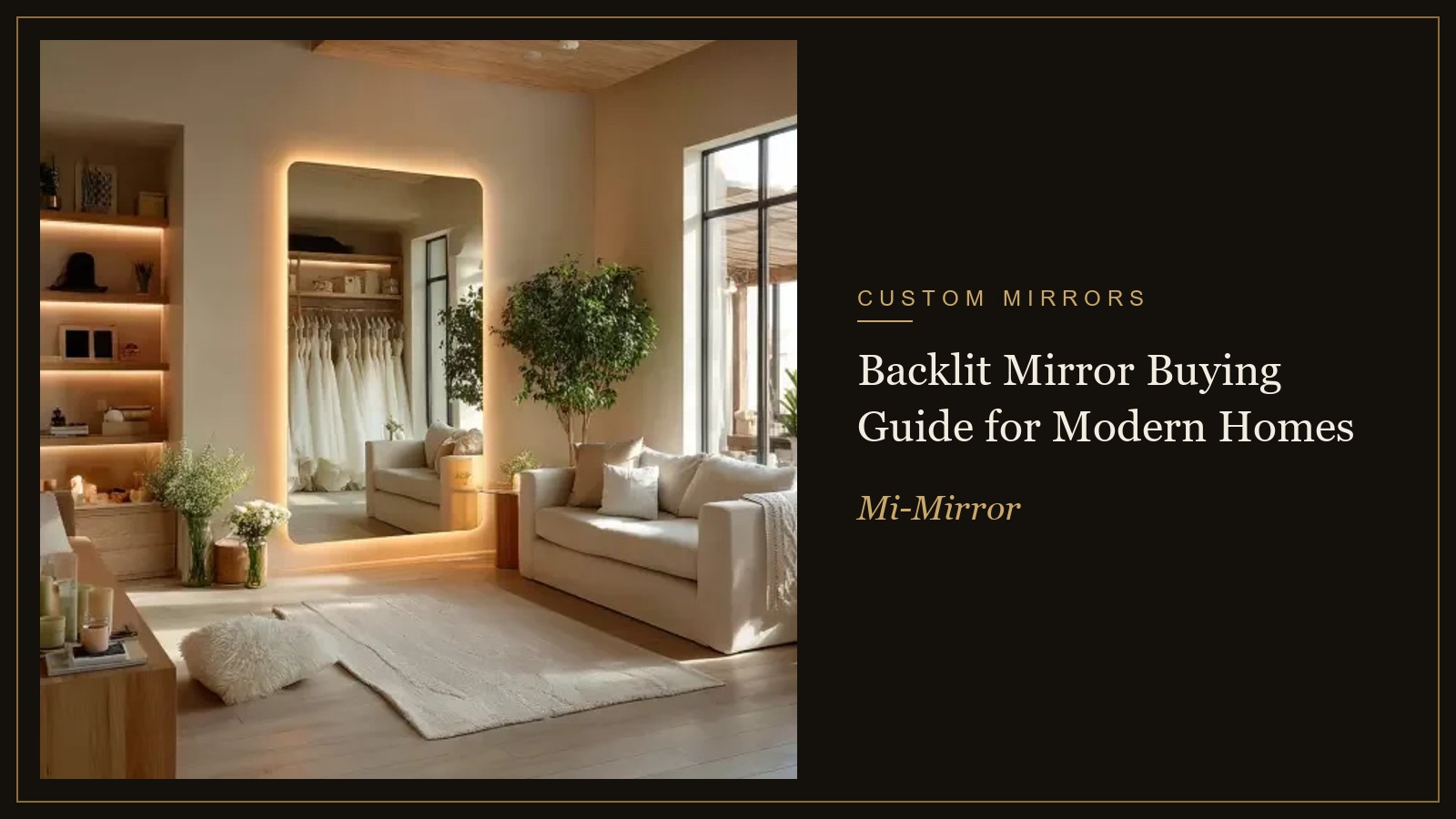
A mirror can change the way a room feels in seconds Add carefully integrated lighting, and it becomes an even more defining element of the room.
Backlit mirrors bring together reflection, illumination, and modern design in one fixture. The soft glow around the glass can add depth to a bathroom, create a refined dressing area in a bedroom, or become a distinctive design feature in a luxury home. For homeowners, it brings together visual appeal and everyday function. For interior designers and builders, the mirror becomes another design element to coordinate with the room’s lighting, materials, scale, and architectural details.
But choosing the right mirror takes more than picking a shape you like. Size, lighting direction, color temperature, dimming, mounting type, finish, room function, and customization options may influence the result.
This buying guide walks through the key considerations so you can choose a backlit mirror that looks right, works with your space, and supports the way you use the room.
A backlit mirror is a mirror with integrated lighting positioned behind the glass or around its rear perimeter. When switched on, the lighting creates a gentle halo around the mirror and casts a soft glow onto the surrounding wall.
Unlike a traditional mirror paired with a separate wall fixture, the lighting is incorporated into the mirror itself. This creates a cleaner visual effect and reduces the number of separate elements around the vanity or dressing area.
Backlighting can serve several purposes:
The key is to select lighting that complements the room’s purpose rather than treating illumination as an afterthought.
The mirror’s shape and frame should work with the room’s architecture and existing furniture.
Curved mirrors are especially effective in a room full of straight lines. Round or oval shapes can soften vanities, cabinetry, tilework, and other angular elements.
Oval styles are especially effective in primary bathrooms, boutique-style spaces, and areas where you want the mirror to serve as a visual focal point.
Rectangular mirrors remain a practical choice for bathrooms, bedrooms, and dressing areas. Their clean geometry works naturally above straight vanities and across wider walls.
A larger rectangular mirror can also provide a strong sense of continuity when used above a double vanity.
If your interior already has distinctive architectural details, an irregular or organic mirror can add personality without requiring additional decorative elements.
For designers working on premium residential projects, custom silhouettes can also be developed to suit a specific design concept.
A frameless mirror keeps the focus on the glass and lighting. This works particularly well in minimalist interiors.
A framed design gives you another material and finish to coordinate with faucets, cabinetry, hardware, or architectural accents. Mi Mirror’s bathroom and hospitality collections include a range of frame finishes and materials, allowing designers to coordinate the mirror with the surrounding interior.
The right mirror depends heavily on how the room is used.
A backlit bathroom mirror should complement the vanity, countertop, faucet finishes, and existing lighting scheme. Start by measuring the available wall space and the vanity below it.
A useful design principle is to choose a mirror that is equal to or slightly narrower than the vanity. This generally creates a balanced relationship between the two elements.
Think about how you use the bathroom, too. If the mirror is primarily for everyday grooming, prioritize useful illumination and a comfortable viewing area. If the goal is to create a spa-inspired atmosphere, softer, warmer lighting may be more appropriate.
In humid environments, review the manufacturer’s specifications for the specific model rather than assuming every illuminated mirror offers the same level of performance.
A backlit mirror for bedroom spaces can work beautifully above a vanity, dresser, or dedicated dressing area. Here, lighting often plays a larger decorative role.
A softly illuminated mirror can create a warm evening atmosphere while providing useful light when getting ready. A full-length illuminated design can also become a strong focal point in a walk-in closet or dressing room.
Think about the surrounding furniture before choosing the size. The mirror should have enough visual presence to feel intentional without dominating the room.
Once you’ve narrowed down the shape and size for your backlit mirror, look closely at the specifications.
Look at where the light is positioned and how it spreads across the mirror. Integrated lighting can be configured in different ways, so the visual effect varies from one design to another.
Mi Mirror offers different lighting configurations for custom projects, allowing designers to coordinate the mirror’s illumination with the room’s overall lighting plan.
Dimming gives you greater control over the room’s atmosphere and brightness. It can be particularly useful when the same mirror needs to work during a bright morning routine and a quieter evening setting.
Color temperature affects how colors, materials, and surrounding finishes appear. Take into account your current fixtures and the atmosphere you wish to create before choosing a light temperature.
For bathroom applications, anti-fog functionality can be worth considering, particularly in spaces where condensation frequently affects mirror visibility. Certain models of the Mi Mirror for bathroom and hotel applications are equipped with anti-fog functionality.
Wall dimensions rarely follow a standard size. Custom sizes are especially useful when the mirror must be installed over an existing vanity, in a niche, as part of a millwork package, or within an architectural opening.
A mirror frame can become part of the room’s material palette. Matte black, brushed metal, gold, wood, and no frame all lead to different visual directions.
Some models offer touch controls for lighting, while others may incorporate additional smart functionality. Consider which features genuinely support the way the mirror will be used rather than adding technology that does not serve the space.
Color temperature describes the appearance of the light, from warmer tones through neutral options to cooler white light.
Warm light can create a relaxed, comfortable atmosphere. Neutral light is a good choice for general, day-to-day use as it offers a well-rounded look. Cool light also has applications in areas where a clean, more work-oriented ambiance is desired.
For a bathroom, consider the activities performed in front of the mirror. Makeup application, shaving, skincare, and general grooming may benefit from different lighting preferences. For a bedroom, ambiance may carry more weight.
Dimming gives you another layer of control. Rather than locking the mirror into one brightness level, you can adjust the lighting to suit different times of day and activities.
The right choice should complement the room’s existing lighting, materials, and overall design.
Placement can influence both the appearance and usefulness of an illuminated mirror.
The most obvious location is above the bathroom vanity. Centering the backlit vanity mirror creates a strong visual anchor and makes the entire wall feel more organized.
If the bathroom has a window, consider what the mirror will reflect. A well-positioned mirror can reflect daylight and make the room feel more open.
Position the mirror where it best supports your daily routine. Over a dresser or vanity, it can establish a special grooming area. An illuminated full-length mirror can be both functional and visually striking in a large walk-in closet.
A backlit mirror can bring a more refined feel to a walk-in closet while providing useful illumination for outfit selection and styling.
An illuminated mirror near an entryway can serve a practical purpose while becoming an attractive focal point. Choose a size that fits the wall without restricting movement around the area.
In a living room, a mirror can work as an architectural accent. Positioning it where it reflects natural light, artwork, or another attractive part of the room can add depth without making the mirror feel purely functional.
A wall-mounted backlit mirror can work especially well here when the goal is to keep the floor area open.
Before ordering, treat installation as part of the design process rather than a detail to address after delivery.
Start by discussing the project with your electrician or qualified installer. Ask what connection method the selected mirror requires, where the electrical connection should be located, and whether the planned installation area meets the mirror’s specifications.
It’s also worth confirming:
For a renovation, share the mirror specification with your contractor early. For a new-build or larger project, architects and designers can coordinate the mirror dimensions and lighting configuration with the broader interior plan.
Professional backlit mirror installation is recommended when the mirror requires electrical connection, specialized mounting, or coordination with other construction work. The manufacturer should remain the primary source for model-specific installation requirements.
When it comes to designing a modern interior, the right mirror can completely change the atmosphere of a space. Beyond functionality, mirrors act as visual anchors that influence light, depth, and style. Backlit styles, especially, introduce a soft architectural glow that can give an everyday room a more polished, design-driven feel.
Below are five inspiring ideas to help you choose the right backlit mirror style for your home, along with product suggestions you can explore for each concept.
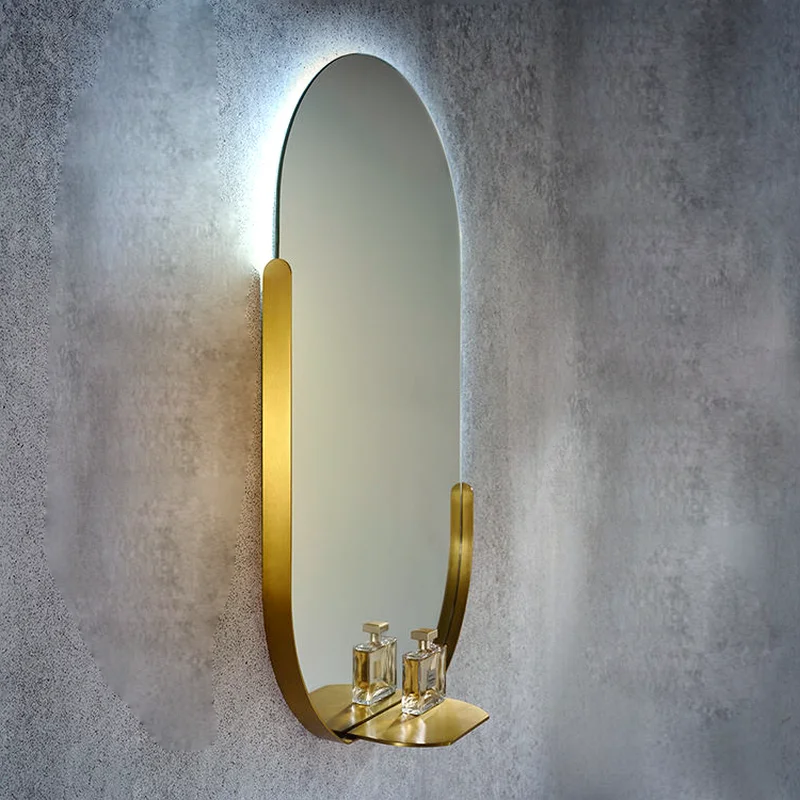
An oval mirror with a soft backlight can warm up a room of all hard surfaces. Combine it with natural stone, warm wood, brushed metal, and simple accessories to create a calm, residential environment.
For this look, consider the Luxury Oval Backlight LED Mirror with Shelf, which combines elegant curvature with integrated lighting and practical storage. This is ideal for creating a spa-like vanity setup.
For a spacious primary bathroom, a large rectangular illuminated mirror can visually connect two sinks while creating a clean, continuous focal point.
The Sleek Rectangular LED Bathroom Mirror is well suited to this application, designed to provide even illumination across wider vanities while maintaining a sleek, architectural presence.
Choose a finish that coordinates with the vanity hardware for a more cohesive result.

Turn a small corner into a dedicated dressing area with an illuminated mirror above a compact vanity. This approach works particularly well in bedrooms where space is limited but a defined getting-ready zone is desirable.
The Round LED Vanity Mirror works beautifully in this setting, offering soft ambient lighting and a compact form that enhances bedroom furniture without overwhelming the space.

A tall illuminated mirror can make a dressing room feel more polished while giving you a practical full-body reflection. Keep the surrounding wall relatively open so the mirror has room to breathe.
For this application, the Decorative LED Rectangle Wall Mirror is an ideal choice, combining scale with integrated lighting to support outfit selection and styling in walk-in closets.

For a luxury interior, consider moving beyond standard geometry. An organic, arched, or sculptural silhouette can become part of the architecture.
A custom LED Mirror allows you to tailor shape, size, lighting tone, and frame finish to your exact space, well suited to creating a distinctive focal point that reflects your interior concept.
Custom fabrication allows the dimensions, shape, frame finish, lighting configuration, and mounting approach to be developed around the space. Mi Mirror develops custom solutions to meet specific dimensions, finishes, lighting requirements, and installation conditions.

Backlit mirrors are a versatile design solution used across residential, hospitality, and commercial environments. Beyond their aesthetic appeal, they can improve functionality, support better lighting around key areas, and contribute to the overall experience of the space.
Commercial projects rarely follow a single standard layout. Each space has its own dimensions, function, and design requirements, which makes flexibility essential when specifying mirrors.
The right illuminated mirror should feel like part of the room’s design from the moment you see it. That means getting the proportions right, choosing lighting that suits the space, and selecting finishes that work with the rest of the interior.
For homeowners, a custom mirror can solve an awkward wall dimension or create a more polished bathroom or dressing area. For architects, interior designers, and contractors, custom fabrication provides greater control over dimensions, finishes, lighting configurations, and project coordination.
Mi Mirror works with residential and commercial clients to develop premium mirrors for rooms or areas around specific design requirements. Its existing project work covers luxury bathrooms, bedrooms, hospitality environments, salons, wellness spaces, and other professionally designed interiors.
If you are designing a new bathroom, remodeling a bedroom, or specifying mirrors for a commercial project, begin with the room. Take accurate measurements, think about how the mirror will be used, consider your lighting needs and customization options, and discuss your requirements with our team before placing the order.
Ready to create a mirror around your space? Contact Mi Mirror to discuss your dimensions, design preferences, lighting options, finishes, and project requirements.
A backlit mirror can provide useful illumination around a vanity. Still, you shouldn’t rely on it as the only light source for the whole bathroom. Space size, mirror layout, output level, and overall lighting layout all have an impact. Mi Mirror recommends layering mirror lighting with other light sources in the room for a more balanced lighting scheme.
Clean the glass with a soft microfiber cloth and a suitable non-abrasive glass cleaner. Avoid allowing cleaning products to accumulate around the frame, controls, or other integrated components. Follow the manufacturer’s care instructions for the specific mirror.
It can be useful depending on how the mirror is used. A timer or automatic shutoff may make sense for hospitality, rental, or high-use environments, while a residential user may prefer simple manual controls. Check which options are available for the specific model.
These ratings describe a product’s level of protection against the entry of solids and water under defined testing conditions. The appropriate rating depends on the specific installation location and product requirements. Always check the manufacturer’s documentation rather than assuming a particular rating applies to every bathroom mirror.
Yes, custom mirror sizing can be developed around existing vanity dimensions, wall layouts, and architectural requirements. Mi Mirror offers custom dimensions and lighting configurations for project-specific applications.
The main distinction is how the mirror connects to the home’s electrical system. The appropriate option depends on the mirror specification, room layout, and project requirements. Confirm the supported connection method with the manufacturer for the specific model, and then consult your electrician about the appropriate installation method.
There is no single color temperature that works for every bathroom. Warm lighting creates a softer, more relaxed atmosphere, while neutral lighting offers a balanced option for everyday grooming. Cooler lighting can provide a brighter, more task-focused feel. Mi Mirror offers warm white, cool white and neutral lighting options, allowing you to choose a setting that suits the room’s function and overall design.