FREE SHIPPING On All Orders
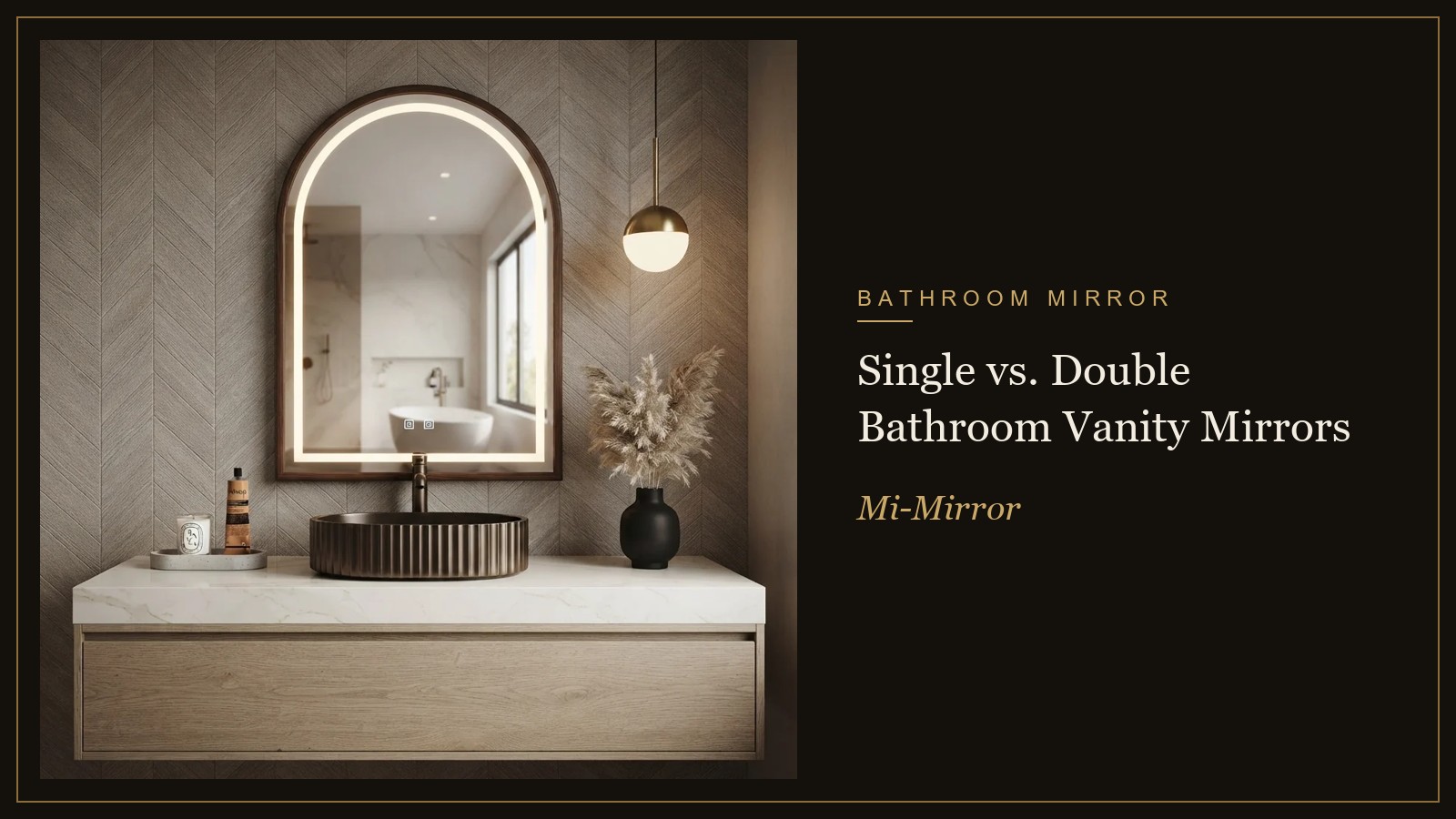
The mirror above your bathroom vanity has more influence on the room than you might expect. It affects how the vanity looks, how evenly the space is illuminated, and how comfortable the bathroom feels during everyday routines.
The choice becomes especially important when you are designing a double-sink vanity. Should you install one wide mirror across the entire vanity, or use two separate mirrors above each sink?
There is no universal answer. The right option depends on the vanity width, wall dimensions, lighting plan, bathroom layout, design style, and how the space will be used.
For a small bathroom, one mirror can make the space look neater and more open. In a large primary bath, two mirrors can allow each sink to have its own visual zone and help the room feel more balanced. Custom sizing also changes the equation, especially when the vanity is the wrong size.
Here is a simple comparison of single vs. double bathroom vanity mirrors to help you select a mirror configuration that fits the bathroom and design goals for your home or next project.
Before comparing styles, it helps to define what each configuration means.
A single bathroom vanity mirror is one continuous mirror installed above one sink or across a wider vanity. The mirror may be rectangular, round, oval, arched, or another shape depending on the room.
For a single-sink vanity, the mirror is usually centered over the sink and vanity cabinet. On a wider vanity, a single mirror can be run across the entire grouping for a single visual plane.
This approach works especially well in modern bathrooms, where clean lines and uninterrupted surfaces are central to the design. A large rectangular mirror can also extend the vanity wall and create the illusion of more space in a small bath.
A double bathroom vanity mirror uses two separate mirrors, generally with one positioned above each sink.
The two mirrors can be identical for a symmetrical appearance, or they can use complementary shapes and finishes for a more customized interior. This setup gives each sink a defined visual zone. It can work especially well when the vanity has two distinct cabinetry sections.
Two mirrors are also useful when each sink has its own lighting, storage, or wall-mounted accessories. The separation also gives each sink its own visual zone without losing the symmetry of the vanity.
Two mirrors offer more structure and definition, giving each sink its own zone and allowing space for lighting or decorative features between them.
A single mirror is also easier to maintain with one surface, while two mirrors provide more flexibility for layouts with separate sink centers or wall interruptions.
Consideration | Single Mirror | Double Mirrors |
Visual effect | Wide, continuous look | Defined, symmetrical zones |
Best suited to | Long vanities and clean layouts | Double-sink vanities with separate zones |
Lighting | Works well with integrated LED or overhead lighting | Ideal for individual sconces or integrated lighting |
Style | Minimal, contemporary, streamlined | Balanced, architectural, more traditional |
Wall interruptions | Fewer visual breaks | Can work around wall features |
Customization | Excellent for broad statement designs | Useful for individualized sink areas |
Maintenance | One surface to clean | Two smaller surfaces to maintain |
Neither option is inherently better. The better choice is the one that fits the bathroom’s proportions and functional requirements.
Choosing the right bathroom vanity mirror starts with understanding your space, your vanity layout, and how you use the bathroom every day. The right mirror should balance proportion, lighting, and style while enhancing both function and design. Whether you’re working with a single or double vanity, a thoughtful selection can completely change the look and feel of the room.
The vanity sets the proportions, so begin by using it as your reference point rather than choosing a mirror first.
Measure the full vanity width, identify each sink center, and note available wall height. Also account for sconces, outlets, cabinets, medicine cabinets, and any nearby fixtures that may affect placement.
For a single-sink vanity, placing one mirror centered above the sink is generally the easiest and most visually pleasing option. The mirror can be the same width as the vanity or narrower if wall space or design intent dictates.
For a double vanity, choose whether you want one continuous mirror that visually connects both sinks or two separate mirrors that define individual zones.
A single wide mirror is best with continuous countertops and few breaks in the cabinet layout. Two mirrors are typically better for vanities that have separate sink areas or if lighting is being installed for each side separately.
Rectangular mirrors complement the crisp lines of modern design. Round and oval mirrors soften hard layouts. Arched mirrors bring architectural appeal and interest to your walls without the need for extra framing or detailing.
Integrated LED mirrors provide direct task lighting and a streamlined look. Wall sconces, on the other hand, add decorative character and can help define spacing between or beside mirrors.
Frame and edge finishes should tie into surrounding materials. Matte black pairs well with dark hardware, brushed metal or gold complements warm fixtures, and mixed finishes can help unify lighting, faucets, and cabinetry.
Not every bathroom is designed with the standard 48-, 60-, or 72-inch vanity in mind. Custom homes, updated bathrooms, upscale communities, and hotel projects frequently feature atypical wall lengths that call for a higher degree of accuracy.
A custom vanity mirror can be made around the actual dimensions of the vanity and wall rather than forcing a standard mirror into the available space.
LED mirrors integrate built-in lighting directly into the mirror surface, providing even illumination for daily grooming tasks. They are especially useful in bathrooms with limited natural light or where layered lighting is required.
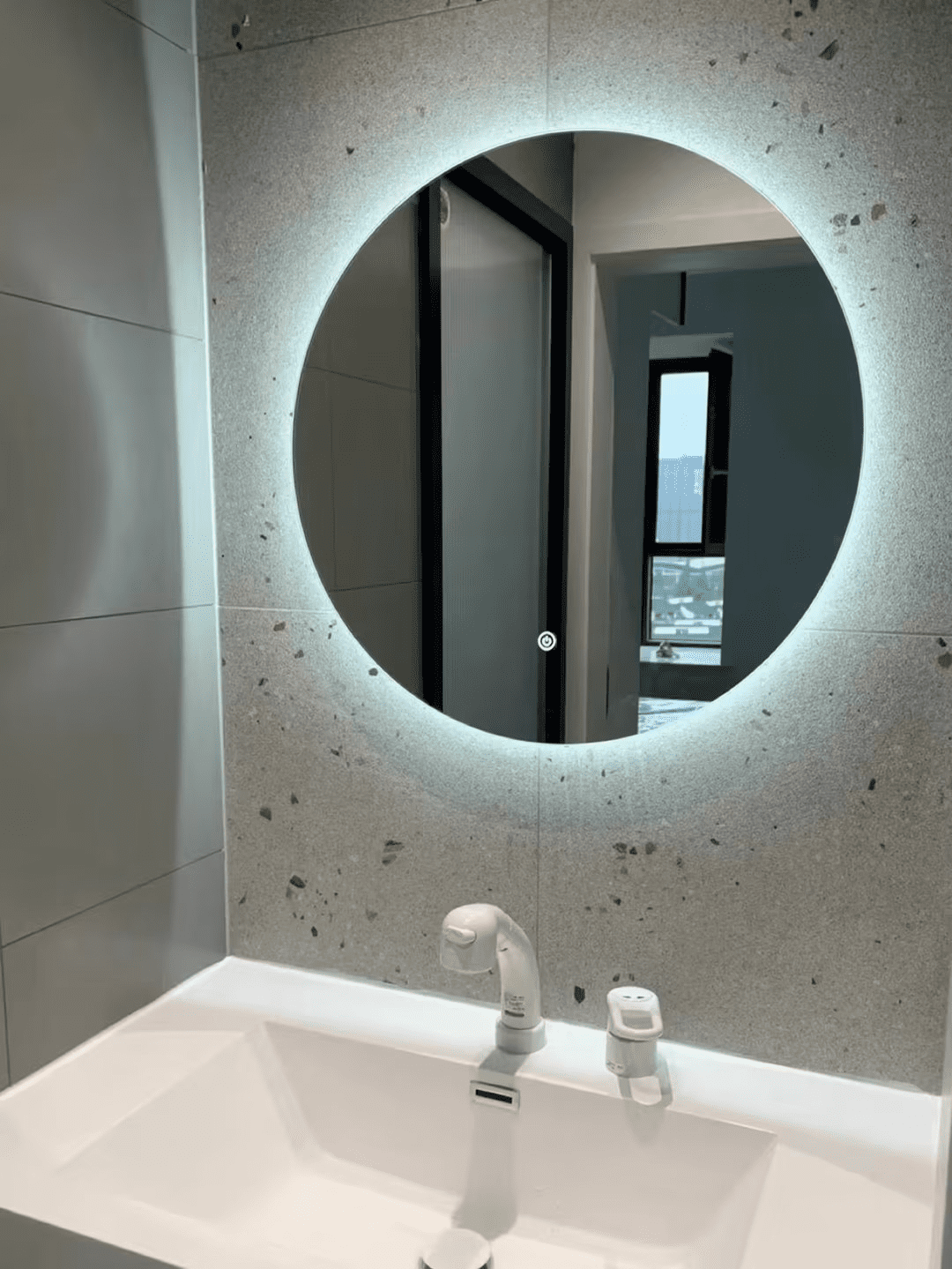
Backlit mirrors create a soft glow around the perimeter of the glass and add depth and dimension to the bathroom. This treatment is favored especially in luxury homes where ambient lighting plays an important role in the overall design.
Framed mirrors introduce material contrast and help the mirror become a design feature in the room. They can be coordinated with hardware, cabinetry, or lighting finishes for a unified look.
Round mirrors soften the geometry of a bathroom dominated by straight lines and rectangular vanities. They are often used to create visual balance above single or double sinks.
Smart mirrors combine reflection with integrated technology such as touch controls, lighting adjustment, defogging systems, and optional connectivity features. They are increasingly popular in high-end residential and hospitality projects.
Take accurate measurements before ordering a custom bathroom mirror, as even small variations in wall or vanity alignment can affect the final fit and appearance.
Follow these key steps:
If you are installing two mirrors, measure each sink center individually for proper alignment and spacing.
For best results, submit a simple dimensioned sketch or detailed measurements to the manufacturer, especially for large mirrors, integrated lighting, recessed installations, or multi-bathroom projects.
The single-versus-double decision is only one part of the design. The mirror’s technology, shape, frame, and lighting can significantly change the character of the bathroom.
LED mirrors combine reflection with integrated illumination. They are useful when grooming requires consistent light and when you want to reduce reliance on overhead fixtures.
Bathroom mirrors with LED mirrors have front-facing and backlit configurations, adjustable lighting options, and high color-rendering performance for grooming applications. A standout example of a single vanity mirror is the Bathroom Vanity Cabinet With LED Mirror, which is designed to deliver even, shadow-free lighting while maintaining a sleek, modern profile. These designs are also available in custom sizes and styles, making it easy to match them precisely to a vanity layout or integrate them into a full bathroom design concept.

Backlit mirrors create illumination behind the mirror, producing a soft halo effect around its edges. They work particularly well in contemporary and luxury bathrooms where ambient lighting is part of the design.
Mi Mirror’s Japandi Backlit Irregular Bathroom Mirror is such a style that combines an irregular silhouette with integrated backlighting for a more distinctive look. Its design can work particularly well in interiors that favor softer forms and a less conventional mirror profile.

Framed mirrors introduce another material and finish to the vanity wall. Wood can add warmth, while metal finishes can reinforce modern or luxury hardware.
A distinctive, practical example is our Framed Half Moon Backlight Wall Bathroom Mirror that combines a framed structure with a half-moon silhouette and integrated backlighting. The framed profile creates a stronger visual boundary around the mirror, while the illuminated design adds depth to the vanity wall.
For designers working with contemporary or luxury bathrooms, a framed mirror can also help coordinate the vanity area with other finishes such as cabinet hardware, faucets, lighting, and wall materials.

Round mirrors are a strong choice when you want contrast against a rectangular vanity. Their curved silhouette can make the bathroom feel softer and more relaxed. A popular example is the Round Vanity Bathroom Mirror, a dedicated round LED bathroom mirror with integrated illumination, touch-control functionality, and a copper-free silver mirror construction.
Another option is the Classic Round Bathroom LED Mirror, which uses a circular profile with integrated LED lighting and a layered mirror construction designed for bathroom applications.
They work particularly well above floating vanities, pedestal sinks, and contemporary cabinetry where a softer geometric contrast can add visual interest.
Smart mirrors combine traditional reflection with integrated technology. Depending on the configuration, features can include lighting controls, defogging, Bluetooth audio, displays, and other connected functions.
A leading example is the Smart Android Touch Screen Bathroom Mirror, which is designed with an integrated touchscreen alongside LED illumination. The product is available in an 80 cm by 60 cm configuration and incorporates features such as LED lighting and safety-backed mirror construction.
These vanity bathroom mirror ideas can be particularly suitable for premium residential, hospitality, and design-led bathroom projects where technology needs to complement the overall interior rather than appear as a separate addition.

For design professionals, mirror selection should be integrated early in the planning process alongside the vanity, lighting, electrical layout, and wall finishes. This way the mirror supports both the functional requirements and the overall design intent of the space.
Choosing a bathroom vanity mirror may seem straightforward, but small oversights can go a long way in throwing off the room’s function and aesthetic. From the wrong width to insufficient lighting, these frequent errors can result in a mirror that looks out of proportion, underperforms in daily use, or is stylistically incompatible with the rest of the room.
Your decision for one mirror or two should start with the bathroom itself. Consider the size of your vanity, the positioning of your sinks, the size of your walls, lighting, storage requirements, and general design scheme when deciding the best layout.
By now, the comparison of single vs. double bathroom vanity mirrors is quite clear to you.
A single mirror can create a clean, continuous composition, whereas double mirrors can add more definition and symmetry to a double vanity. From there, shape, lighting, frame style, and size determine how the mirror finishes the space.
Mi Mirror specializes in custom bathroom mirror solutions for luxury residential, hospitality, and commercial interiors. Its bathroom collection includes LED, backlit, round, oval, framed, smart, and other configurations, with customization available for dimensions, shapes, finishes, lighting, and integrated features.
That flexibility can help homeowners craft a bathroom that feels custom-made for the space. For interior designers and builders, it offers more control over specifications and coordination with the overall project.
If your vanity has an unusual width or your design calls for a specific shape, lighting configuration, or finish, a custom mirror gives you more freedom to achieve the intended result. Explore Mi Mirror’s bathroom mirror options to create a design tailored to your space and specifications.
Yes. One large mirror can work very well over a double vanity when the wall and vanity have enough width. It creates a continuous visual element and can make the vanity area feel broader. The mirror should still be proportioned around the sink centers and surrounding fixtures.
For a 60-inch vanity, the mirror width depends on the overall wall composition and whether you are using one or two mirrors. A single mirror can be somewhat narrower than the vanity or designed to span much of its width. With two mirrors, each should be centered over its respective sink with appropriate spacing between them.
Not necessarily. A mirror can be narrower than the sink or vanity while still looking balanced. Many designers use the vanity width as the primary reference point rather than matching the mirror directly to the sink.
The appropriate height depends on the mirror size, user height, vanity height, ceiling height, and light source. Leave enough clearance between the countertop or faucet and the bottom edge of the mirror for comfortable viewing. For custom installations, these dimensions must be coordinated before fabrication.
Yes. Two different but complementary mirrors can create a more collected, personalized look. Keep one thing consistent, such as shape, frame finish, scale, color, so the overall feel is still intentional.
Large rectangular mirrors can widen a narrow wall, and round or oval mirrors can soften small spaces. The best option depends on the room size and what is being reflected in the mirror. A mirror that reflects natural light or an attractive part of the room can make the space feel more open.
They do not need to match exactly. Instead, coordinate the mirror with the vanity, hardware, lighting, and surrounding finishes. A contrasting frame can be a deliberate statement, and a finish that closely matches that of the mirror creates a much softer, more integrated look.
Yes. Custom sizing is useful for unusual vanity widths, large wall spans, compact layouts, and architectural spaces where standard dimensions do not provide the desired fit. Mi Mirror offers custom bathroom mirror solutions for unique residential and commercial layouts.
Custom mirrors can cost more than standard products because fabrication can include extra design requirements, materials, finishing, lighting, and production. The final price is based on size and specifications. With a high-end bathroom job, better fit and design coordination can make custom sizing worthwhile.
Yes. Mi Mirror states that its bathroom mirror solutions can be customized in dimensions, shapes, lighting configurations, finishes, and additional features. This allows LED mirrors to be specified around non-standard vanity layouts rather than relying solely on stock sizes.
Size is one factor, but it is not the only one. Glass specification, frame materials, finish, lighting type, smart features, defogging, mounting configuration, and quantity can all affect the final cost. Commercial projects may also have different production and delivery requirements.
Measure the width and depth of the vanity, the width and height of the walls, the centers of the sinks, the height of the countertop, the position of the faucet, the locations of the lights, the points of electricity, the location of the cabinets, and how much room you have to work with. For a precise custom specification, also include any trim, tile, molding, or wall imperfections that may impact the installation.