FREE SHIPPING On All Orders

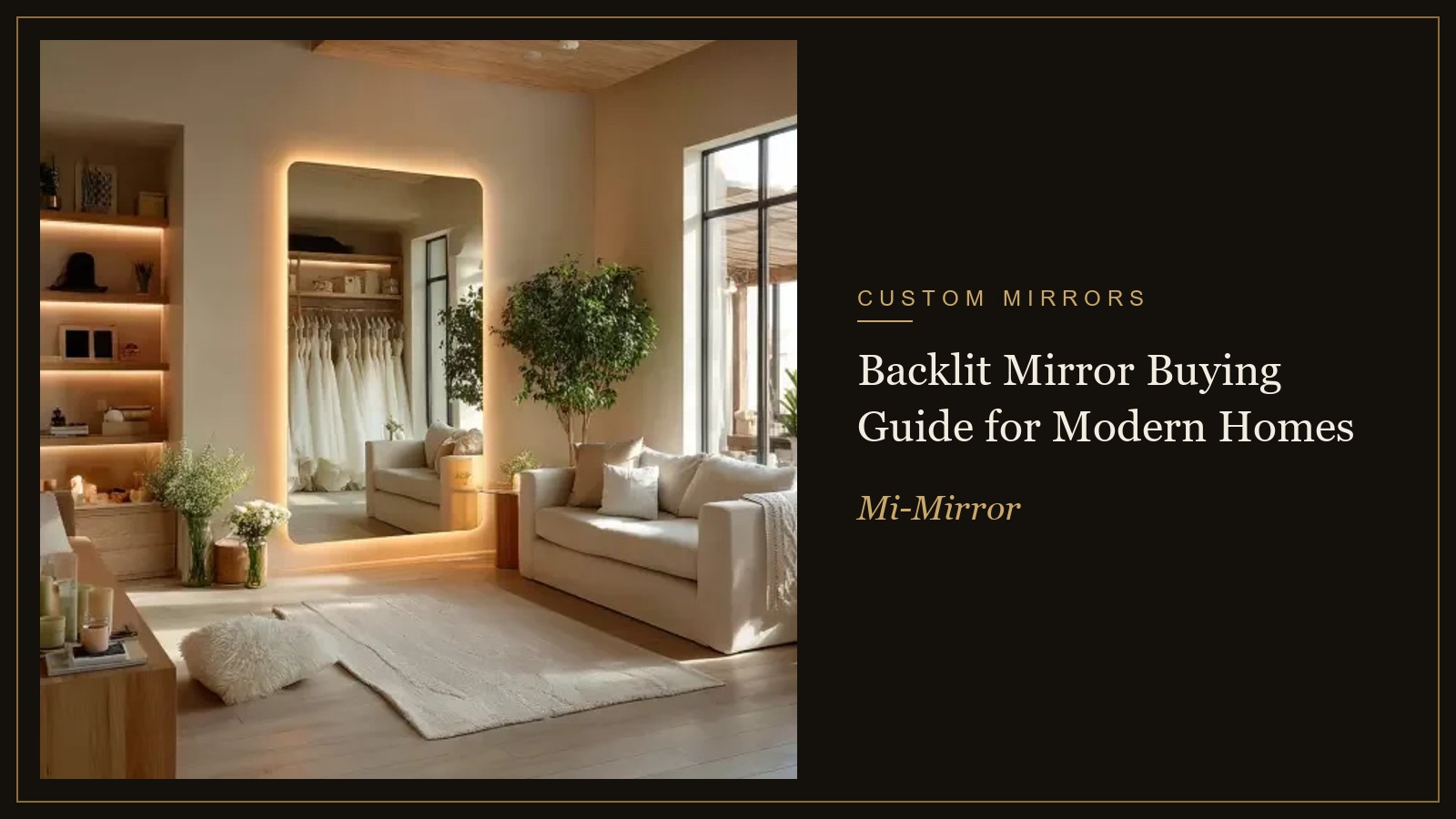
A well-placed mirror can change the way an entire living room feels. It can draw natural light deeper into the space, create the impression of more depth, and give an otherwise overlooked wall a clear visual purpose. When properly sized and positioned, a large mirror can become the visual element that holds the room together.
Choosing that mirror, however, takes more than measuring the wall and picking a finish you like. Scale, proportion, shape, frame style, glass detailing, and positioning all affect how the final room looks. A mirror that is too small can lose its punch, and one that overwhelms the furniture can make the room feel unbalanced.
For homeowners creating a refined living space, or designers and architects specifying mirrors for a residential project, the right choice should work with the architecture and surrounding finishes. This guide explores how to select a large wall mirror for a living room, from choosing the right dimensions and shape to selecting a style and finish that feels intentional.
Mirror size is not about picking the biggest option available. It is about proportion relative to the wall, the furniture, and the room’s overall scale.
Begin by measuring your available wall space. A big decorative wall mirror should fill about one third of the wall height; however, this depends on the room and style. In a room with 9-foot ceilings, a mirror 3 to 4 feet tall reads as substantial without being overwhelming. In a room with 10-foot ceilings, a 4 to 5-foot mirror works better.
The width matters equally. A 4-foot-wide mirror can work well on a 12-foot wall, provided the surrounding furniture and negative space support the scale.
The mirror should relate proportionally to the furniture beneath it. A mirror above a sofa should not be wider than the sofa, and ideally should be 20 to 30 percent narrower. This creates visual balance where the mirror anchors the wall without the sofa appearing to float beneath it.
If the mirror hangs above a console table, follow the same principle. The mirror should be narrower than the surface beneath it.
Living rooms come in different styles, and the right mirror reinforces the design direction. Here are living room mirror ideas that work across different aesthetics:
A minimalist living room benefits from a mirror that provides visual interest through shape rather than ornamentation. An arched or curved mirror in a clean, simple frame introduces architectural interest without decoration that would contradict the minimalist aesthetic.
An oversized wall mirror in this format provides a focal point that supports contemporary furniture and clean lines. The arch adds softness to a room that might otherwise feel austere. For a more tailored option, explore Mi Mirror’s Contemporary Arch Design Wall Mirror, which is available in multiple sizes and finishes, including black, gold, gray, and rose gold.

A traditionally styled living room or eclectic space can carry a mirror with a more detailed frame. Carved wood, decorative metalwork, or layered finishes speak to craftsmanship and history.
A large decorative wall mirror with a substantial frame becomes a piece of furniture, not just a functional object. It pairs naturally with classic furniture and detailed architectural elements. The Decorative Gold Design Luxury Mirror is well suited to this approach, which uses an ornate gold design to create a distinctive focal point in formal and traditional interiors.

Modern and industrial living rooms often benefit from frameless mirrors. Clean glass edges, no ornamentation, full transparency. This approach maximizes the reflective surface while minimizing visual bulk.
For a Scandinavian or mid-century modern living room, a large frameless mirror provides functional reflection and light amplification without competing with existing design elements. Mi Mirror’s Rectangle Mirror Collection includes frameless and floating designs alongside framed options, making it easier to select a clean profile that suits a modern wall.

A living room pursuing a bold aesthetic can carry a mirror in a distinctive frame color. Brushed gold, matte black, or painted wood frames add personality while anchoring the design color story.
A large, custom wall mirror with a colored frame becomes a statement piece that sets the tone for the entire room. For example, the Vibrant Orange Framed Full-Length Mirror is available in blue, green, orange, and white, offering a way to introduce a stronger accent color into a contemporary interior.

A high-end living room or formal space can benefit from a mirror with beveled edges or Venetian glass styling. The way light refracts through beveled edges creates movement and visual interest.
This style works particularly well above a fireplace mantel or as the primary focal point of an elegant living room. It reads as a luxury accent rather than a functional necessity. Our Beveled Edge Modern Rectangular Mirror includes beveled-edge designs with polished detailing, making this style suitable for interiors that call for subtle depth and refined visual character.

Mirror shape affects how a room feels and how it interacts with the furniture arrangement.
Placement determines how effectively the mirror functions and how it impacts the room’s design.
A custom mirror allows you to specify exact dimensions, finishes, and frame details that off-the-shelf options cannot match.
A custom mirror makes sense when standard sizes do not fit your wall perfectly, or your design vision requires specific finishes or frame details. The upfront cost is higher, but the mirror integrates easily into your space and feels built for it. Lead times for custom large wall mirrors typically range from six to twelve weeks.
Designers specify custom mirrors to ensure continuity across multiple projects and to solve specific spatial or aesthetic requirements. A custom frame finish that coordinates with lighting fixtures or hardware creates the polished detail that clients pay for.
When specifying mirrors across multiple residential units or commercial projects, custom configurations ensure consistency. Engaging directly with Mi Mirror’s team for bulk specifications makes procurement easier and helps maintain consistent dimensions, finishes, and specifications across multiple installations.
The quality of materials and construction determines how the mirror looks and performs over time.
A large wall mirror is one of the most impactful design investments a homeowner or designer can make. The perfect mirror can change how a room looks, works, and photographs. It catches light and spins it around the room. It grounds the design and sets the tone for the room.
The challenge is finding a mirror that fits the space, works with the existing finishes, and supports the room’s overall design direction.
At Mi Mirror, every large wall mirror for living rooms is built to specification. Size, frame finish, glass quality, and mounting method can be adapted to your needs.
For the homeowner, you get a mirror custom-made for your wall and your vision. For the professional designer and contractor, you will find consistent quality, expert support, and project management that makes specifying mirrors across multiple projects straightforward.
Ready to find the perfect mirror? Start exploring options, or reach out to discuss how a custom large wall mirror can change your living room.
A mirror positioned above a sofa should be narrower than the sofa itself and positioned at eye level when standing. For a standard 84-inch sofa, a 60 to 70-inch mirror works well.
Hang the mirror 8 to 12 inches above the back of the sofa or any furniture beneath it. This establishes a visual equilibrium in which the mirror anchors the seating group without floating or overpowering.
Yes, but placement matters. A large wall mirror positioned opposite a window reflects natural light and creates the illusion of depth. The room feels brighter and more open.
A mirror on an inside wall will have less effect on the sense of space. For best impact on a small wall, select a mirror with a thin or frameless design that reduces visual weight and increases the size of the reflective surface.
Neither necessarily. A successful mirror coordinates with existing finishes through intentional contrast or echo. A brushed gold frame can echo gold accents in hardware or lighting without matching exactly.
A matte black frame can contrast warm walls and complement dark furniture. The difference is intentionality. The mirror needs to look like it belongs to the design, and not as an afterthought.
If you don’t want the entrance to become the first thing reflected in the mirror, position it to capture a more attractive interior view instead. Avoid placing the mirror where it reflects clutter or unsightly views.
Avoid positioning mirrors in direct sunlight because glare can be produced and the sun can deteriorate the reflective coating of the mirrors.
Arched or curved mirrors create strong visual impact in contemporary spaces by introducing softness that balances angular furniture and architecture. Round mirrors provide similarly strong impact through geometry and unexpected form.
Large rectangular mirrors pack a punch with their size alone. The right impact will depend on the room’s current style direction and the effect you want the mirror to have, whether it is to add visual interest or simply echo and reinforce the elements already in the space.
A decorative mirror serves a functional purpose while adding visual interest through frame or finish. It coordinates with existing design elements.
A statement mirror is the primary focal point that other elements organize around. It typically has a distinctive shape, substantial size, or unusual frame details that make it the dominant visual feature. Choose a decorative mirror if your room already has a focal point. Choose a statement mirror if you need to define or anchor a space.
Absolutely. Designers working across multiple residential or commercial projects can specify custom mirrors that maintain consistency across all installations while adapting to specific site requirements. Mi Mirror’s design team collaborates with architects and designers on volume specifications, offering project management, coordinated delivery, and uniform quality standards across all mirrors in an order.
Focus on quality over trend. A simple, well-made mirror in a neutral frame will remain relevant for decades. Avoid mirrors with overly decorative elements that are trendy today but dated tomorrow.
Select frame finishes that complement your lighting and hardware (these generally have a longer lifespan of style than wall colors or wood furniture). Traditional shapes such as rectangles, circles, and arches generally have more staying power than highly trend-driven silhouettes.
Both work in modern spaces, depending on your aesthetic direction. Frameless mirrors maximize reflective surface and create clean, minimal lines.
Framed mirrors in simple finishes (brushed metals, natural wood) add subtle visual interest while maintaining a contemporary feel. It depends on whether you want the mirror to blend into the space or stand out and make a small design statement.
Let the mirror be the anchor. Keep surrounding wall space clear so the mirror stands alone as the focal point. If you style objects on a console or shelf beneath the mirror, keep the styling minimal and intentional. Three or five purposeful pieces with breathing room look curated. The mirror should feel like it shapes the space, not that the space is crammed around it.